Building an adventure park is one of the most rewarding investments in today’s tourism and recreational industry. Whether for a resort, school, private land, campsite, farm stay, or commercial adventure destination, a well-designed adventure park attracts visitors, boosts revenue, and creates memorable experiences. But setting up an adventure park requires planning, precision, and professional expertise. In this blog, we walk you through a complete step-by-step process—based on our years of experience at Adventure Rocks.
Step 1: Identify Your Purpose & Target Audience
Every successful adventure park starts with a clear vision.
Ask yourself:
- Do you want a kids’ adventure zone?
- A family-friendly adventure park?
- A high-thrill commercial adventure destination?
- A school or corporate training space?
Your audience determines the type of activities, equipment, and budget.
Step 2: Analyze Your Land & Available Space
Different land types influence the type of installations possible. Adventure Rocks evaluates your site and checks:
✔ Ground strength
✔ Slope levels
✔ Height options
✔ Wind exposure
✔ Water bodies
✔ Safety perimeter
Zip lines work well in sloped areas. Rope courses need height clearance. Kids’ adventure zones fit compact spaces.
Step 3: Choose Your Adventure Activities
Based on budget, audience, and land suitability, you can select:
Major Thrill Activities
- Zip Lines
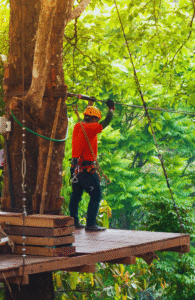
- Rope Courses
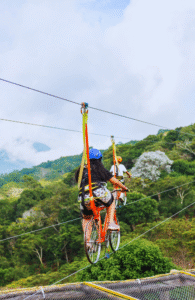
- Zip Cycling
- Zorbing
- Commando Net Zones
Moderate Adventure Activities
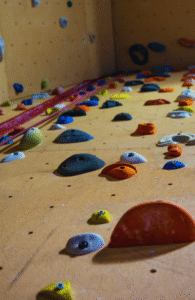
- Climbing Walls
- Bouldering Panels
- Burma Bridges
- Tunnel Crawls
Kids’ Adventure Activities
- Mini Rope Courses
- Kids’ Climbing Walls
- Balance Beams
- Soft Obstacle Courses
Adventure Rocks customizes all activities based on safety, space, and theme.
Step 4: Create a Structured Design Layout
A well-planned design ensures smooth flow and maximum safety.
Our design team prepares:
✔ 2D layout plans
✔ 3D concept models
✔ Safety pathways
✔ Entry/exit points
✔ Activity sequence planning
A good design ensures visitors enjoy activities without crowding or confusion.
Step 5: Use Certified Materials & Construction
This is the foundation of a durable and safe adventure park. Adventure Rocks uses:
- High-grade steel
- Certified ropes
- UV-resistant materials
- Weatherproof wood
- Industrial bolts and anchors
Every structure is engineered to handle maximum load and all-weather performance.
Step 6: Installation by Professionals
Adventure installations require precision—only trained experts should install them.
Our installation process includes:
✔ Structural assembly
✔ Cable and anchor testing
✔ Load calculations
✔ Quality checks
✔ Trial runs
We ensure every element is installed safely and securely.
Step 7: Safety Inspection & Testing
Before opening your park, Adventure Rocks conducts:
- Load tests
- Structural checks
- Harness and rope tests
- Brake and pulley checks (for zip lines)
- Emergency procedure testing
No activity goes live without passing strict safety standards.
Step 8: Train Your Staff
Operator training ensures daily safety and smooth operations.
We train your team on:
✔ Equipment handling
✔ Customer support
✔ Safety briefing
✔ Emergency response
✔ Daily inspection routines
This is essential for maintaining long-term safety.
Step 9: Maintenance & Periodic Inspection
Even the strongest equipment requires routine care.
Adventure Rocks provides:
- Inspection services
- Replacement of worn-out items
- Rope and cable maintenance
- Safety audits
Regular maintenance ensures your park runs safely for years.
Step 10: Launch Your Adventure Park
Once everything is ready, promote your park through:
- Social media
- Local tourism pages
- Resort packages
- School & corporate tie-ups
A well-promoted adventure park becomes a long-term revenue generator.
Conclusion
Setting up an adventure park is an exciting journey that transforms your land into a high-value attraction. With proper planning, certified materials, and professional installation, you can create a safe and profitable adventure destination. Adventure Rocks is your trusted partner, offering complete solutions from design to installation and maintenance.